

Is This the End of Pixel Art?

Is This the End of Pixel Art?
Pixel art is a relatively young art form that was born from the hardware limitations of early computers. Today, those limitations are gone, and AI-generated graphics have emerged. Creating high-resolution graphics is becoming easier and easier. Is pixel art doomed to fade into obscurity?
The Devaluation of Graphics and the AI Challenge

Writer Harry Harrison, in the introduction to "The Golden Years of the Stainless Steel Rat," admitted that he, like other science fiction authors, had sometimes written a story to fit a pre-made book cover. In those days – a good few decades ago – finding decent graphics was so difficult that publishers, upon finding a somewhat decent image, would commission writers to create an entire story around it… Today, anyone can generate much better graphics. Even science fiction literature didn't foresee this.
Is there still any point in learning to draw? A friend recommended a YouTube video to me titled: "Pixel Artists vs. AI: Is This the End?". Among various arguments, the video's author noted a fundamental fact: Current AI generators aren't particularly good at pixel art.
It's true. Pixel Art requires pixel-perfect precision, and current AI simply isn't built for that kind of work. One can assume that until someone tackles this problem and creates an AI dedicated to pixel art, the generated graphics will particularly stand out compared to those created without AI. I write "compared to those created without AI" and not "compared to those created by a human" – because, let's face it, both are created by humans. Whether a person uses algorithms or a paintbrush, they remain the true author of everything that comes into being through their intentions.
So, if generators struggle with pixel art, can pixel artists sleep soundly? But are we missing the real point? I commented on the video: "I see it a bit differently. Pixel Art became popular because people lacked the means to create other types of graphics. Creating Pixel Art was easier and cheaper, and it played on nostalgia. Now, (almost) this role can be filled by AI graphics (…) If I can have graphics in the anime style I like, why would I create or generate Pixel Art?"
The Hidden Cost of Full HD
From my comment, one might infer that Pixel Art is destined to be forgotten. However, I kept thinking about it, and my recent observations led me to revise my views.
Marti Wong finally released a remaster of his legendary game: Little Fighter 2. I'm a huge fan of the original, so I eagerly tried the refreshed version. But it left me with a rather strange impression.
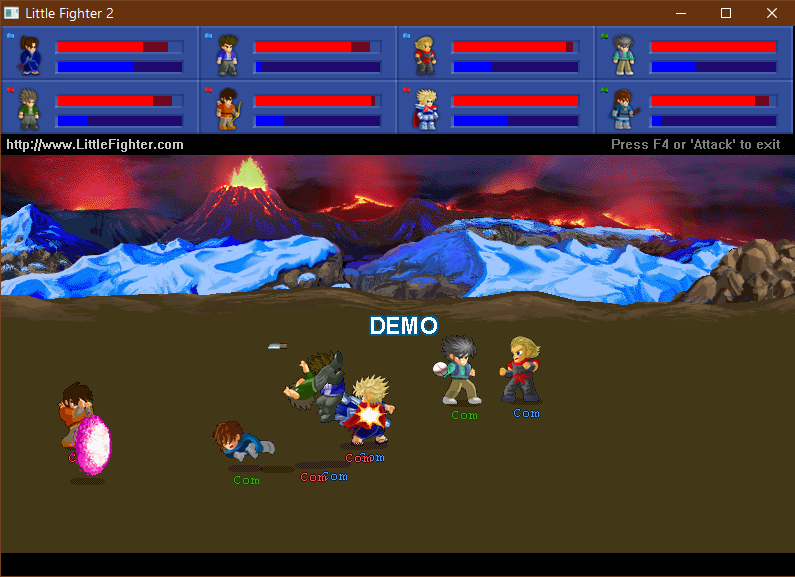
Don't get me wrong: it's not about AI or nostalgia. I never really stopped playing the original LF2, so I didn't feel the mechanics were outdated, nor did I experience the shock of people revisiting remastered versions of their childhood games. Nothing of the sort.
The Remaster Paradox: More Means Less
The Remaster played just as well. The graphics were updated, and everything else was as it always was – except for a troubling feeling: of absence. But an absence of what? At first, I was even ready to bet it was the sound. I had the impression that some characters had become mute. Did the author cut some sounds from the original?
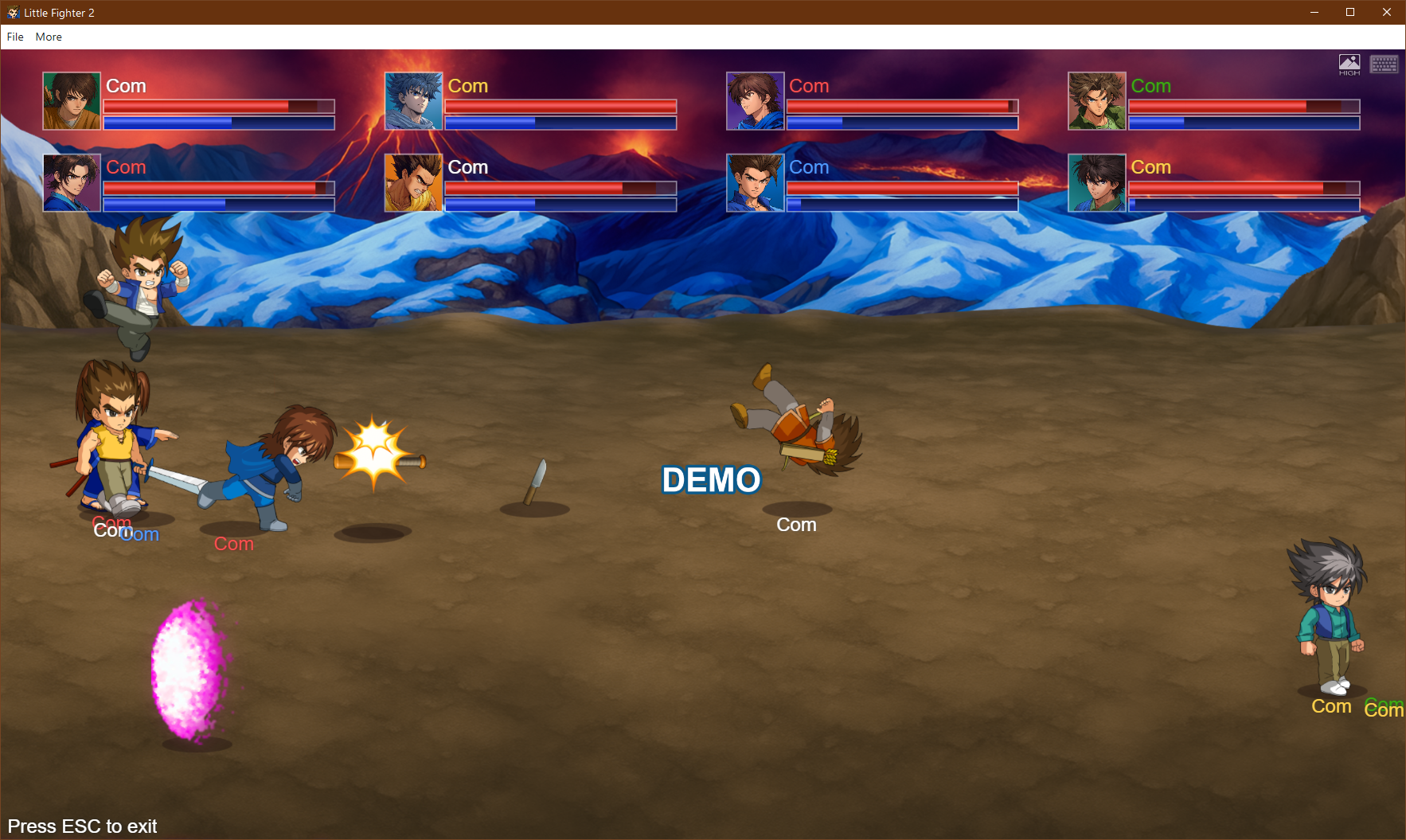
That wasn't the case; yet the feeling remained. The characters had lost their voice. On top of that, I started to be bothered by the jerkiness of the graphics. Again: Were there fewer frames than in the original? Not at all. However, while 140 sprites at a resolution of 79x79 resulted in ultra-smooth graphics, the same number of drawings at a resolution of 269x269 doesn't look nearly as fluid.
I've been playing Little Fighter my whole life, yet I never noticed that a character lying on the ground looks strangely stiff because it's represented by a single drawing… Somehow, it never bothered me before that characters don't blink, and their chests don't move with breathing. Suddenly, a mass of absences appears that weren't there before.
The conclusion suggests itself: What easily goes unnoticed in pixel graphics cannot be hidden in full HD. By opting for higher-resolution graphics, we take on additional burdens and responsibilities.
I experience this constantly myself. Ignoring all the problems and human antipathy towards AI, I decided I would use everything possible to make my game the best it can be. So, it never crossed my mind to abandon the incredible potential offered by generative graphics.
As a result, I'm tearing my hair out because, contrary to popular belief, AI cannot do everything for a person. And when I think about all the people who will later say I took the easy way out by using AI, I'm overcome with blind rage. I've dug myself into a hole!
My younger self from the past, seeing how much time I'm spending on presentation, would probably curse me mercilessly, because I always used to say: "Graphics don't matter! Only gameplay is important!" But a player's opinion is one thing; a creator's desire for their game to amaze everyone is another… Such greed, however, can be a powerful hindrance.
The Example of 9 Kings
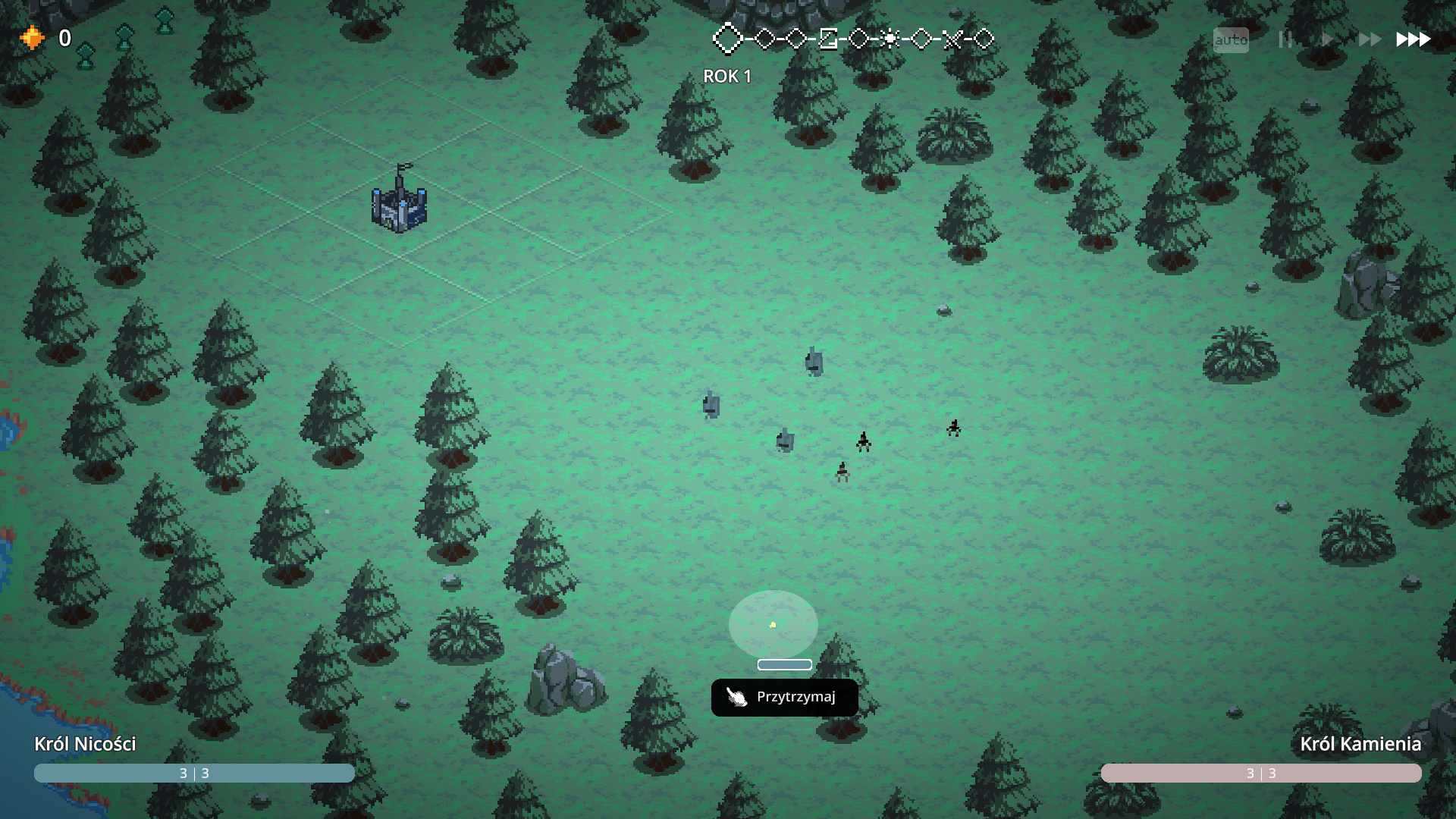
Let's look at the game "9 Kings". It sold fairly well, people like it, and yet the graphics of the soldiers are literally just a few pixels. And let's add: pixels almost devoid of animation. And the sounds of fighting are replaced by primitive squeaks. But so what? The game brings people joy!
Let's imagine if the authors of "9 Kings" were more ambitious in this regard. Even using AI, try generating graphics for every soldier, give them proper animations, because the current ones wouldn't fit. Then you'd have to change the sound effects too; the squeaks are passable with pixels, but never in full HD…
From all this emerges a picture of a colossal amount of work that the tiny studio responsible for "9 Kings" might simply not be able to handle, and the result might not be any more pleasant to experience.
The Costs of Consistency and Inconsistency
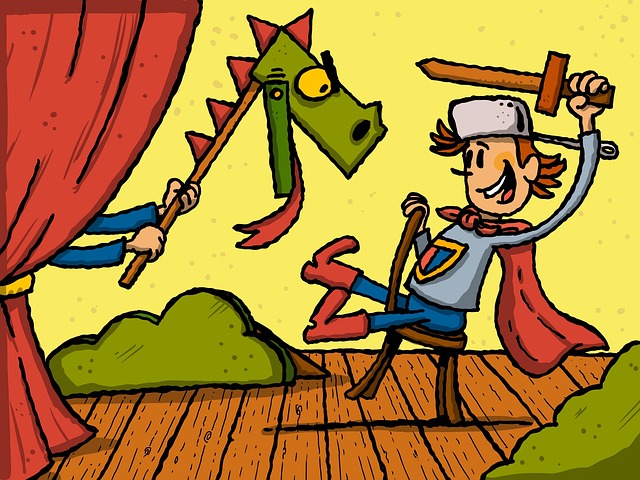
Consistency is what matters in everything. Theatre creators, for example, noticed that what is funny in a comic isn't necessarily funny on stage, and vice versa. The method of presentation influences how a joke is received. Simple gags are best presented with simple drawings.
This is precisely why many famous newspaper cartoonists seem to scribble. It's often not that they couldn't draw better. But "better" could actually be worse. The message of a simple, short comic would be obscured if it were illustrated with overly detailed or realistic graphics.
It's the same with game presentation: Simple mechanics might not fit with complicated graphics.
This might also be one of the reasons for player complaints about modern productions. Of course, game creators have almost always aimed for photorealism, but technological limitations prevented it. Simplified graphics, however, allowed for numerous mechanical simplifications and solutions that would simply look stupid in reality or in a film, but were acceptable because they were simple computer games.
Meanwhile, technology has advanced, ceasing to lag so far behind photorealism. The old mechanics no longer fit and had to be replaced – to the obvious detriment of gameplay. I personally liked, for example, that old-school map design where the creators played with character movement, and you had to, for instance, squeeze through the air at the edge of a platform to reach a secret place…
Examples of Pixel Art in Games
When Simplicity is a Strength: Kill the Crows
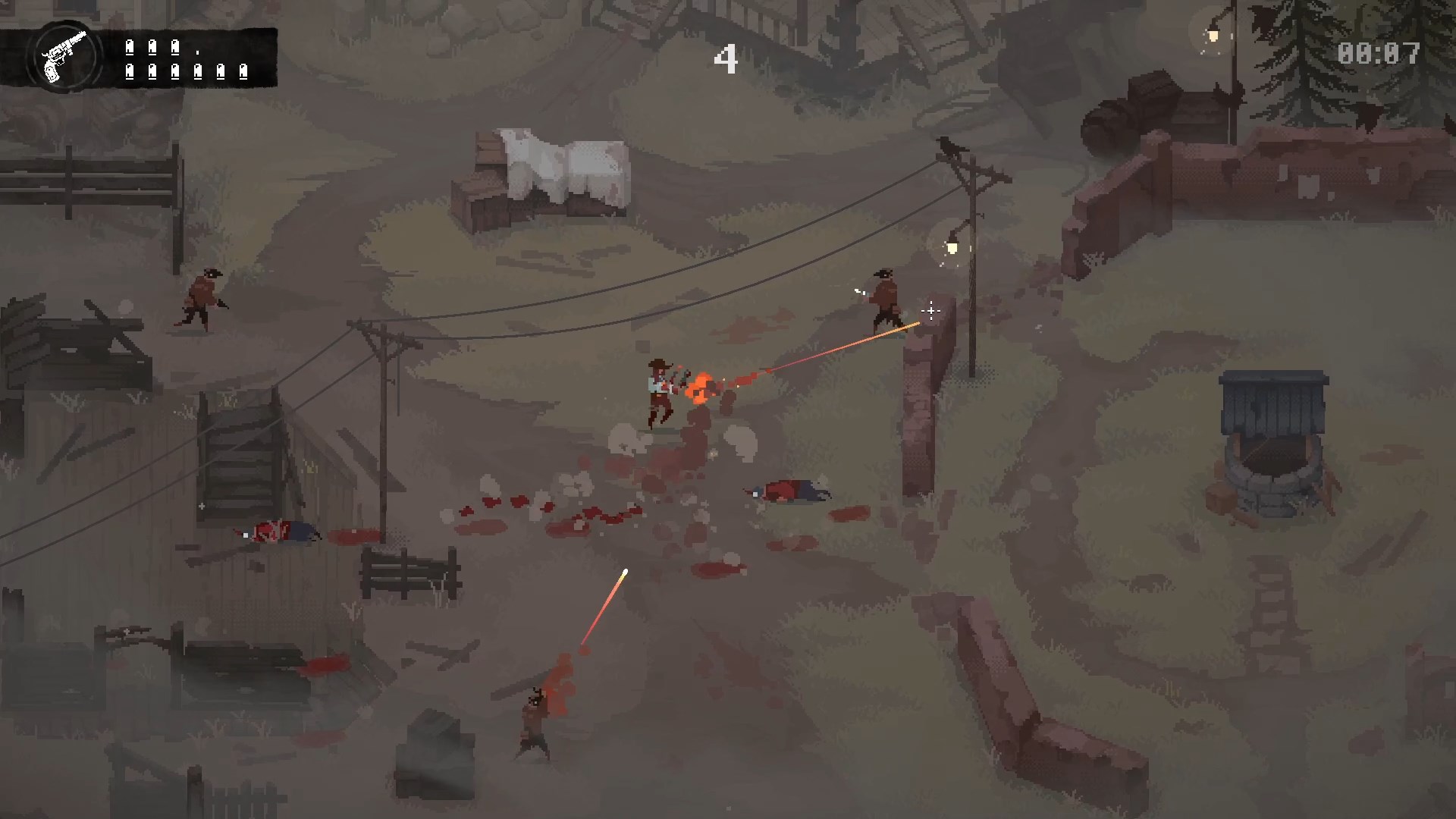
But let's return to pixel art. Look at another Steam hit: "Kill the Crows". A game with mechanics as simple as a programmer's dream, 95% positive reviews from over two thousand! Would it have gained anything by using a different style instead of pixel art? I highly doubt it.
"Kill the Crows" is an extremely difficult game, requiring focus and precision. The clear and unambiguous graphics support this mechanic. Enemy characters lack individuality, and the animation is just a few frames – but we always know perfectly well what is happening on screen. Photorealism would create a lot of confusion here. Not just photorealism, even stylized graphics with higher resolution and a wider set of animations could only be a burden.
When Less Says More: To the Moon
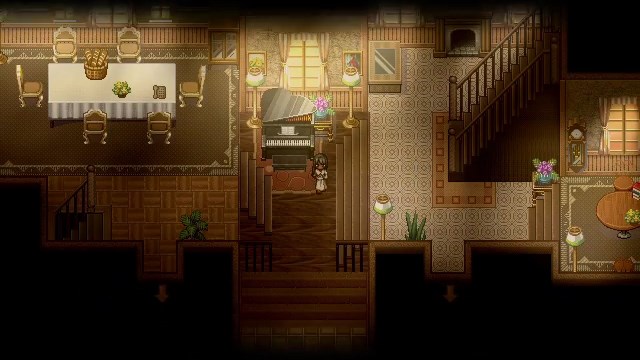
For a completely different reason, I believe "To the Moon" also couldn't be presented better than with pixel art graphics. Here, it's the opposite again: an exceptionally easy, linear, and almost non-interactive game. Since it's all about the story, the plot could successfully be presented in a film. However, I doubt that if it were a film, "To the Moon" would achieve even half the recognition it has now.
The delicate story and atmosphere could so easily be ruined by bad acting… I'm not even sure if it could be acted well at all. In "To the Moon," pixel graphics work like the letters in a book, allowing our imagination to fill in the rest, to co-create the characters' emotions. To empathize in a way that literal representation always kills. It is in this space of implication that true, personal engagement is born.
Summary
Pixel art supposedly arose by accident – born from the technical limitations of early computers. Later, it gained popularity due to other limitations – the limited budgets of independent creators who simply couldn't afford other graphics.
AI graphics bring a certain novelty here, but this novelty doesn't solve the fundamental problem; it only reveals it: the old limitations effectively masked the fact that every detail in high resolution demands attention, and the cost of artistic consistency grows exponentially. What was supposed to make life easier only highlighted the principle: the higher the resolution and ambitions, the greater the creative burden.
Yet, even if all these limitations were to disappear, pixel art will not die. It is an art form that, like no other, is connected to computer games, and there will always be games for which pixel art will not be merely an option. It will be the best choice. Glory to the pixels!
References:
I referred to the video by DevKxm (available on YouTube in Polish): https://youtu.be/LTEY9rOWgMU?si=7UKQyM8ynAMxrd6d
Banner: Photo by Francesco Ungaro: https://www.pexels.com/pl-pl/zdjecie/mozaika-alien-na-scianie-1670977/
Cartoon illustration of a child playing a knight fighting a dragon on a theatre stage with a curtain. Image by Richard Duijnstee z Pixabay
https://pixabay.com/pl/illustrations/facet-twarz-surrealistyczne-845847/
The article contains screenshots from the games: Little Fighter 2, Little Fighter 2 Remastered, 9 Kings, Kill the Crows, and To the Moon. All trademarks belong to their respective owners.